
Designing an equitable, consensus-driven Climate Action Plan for Denver
Overview
In late 2019, the Civic Consulting Collaborative (CCC) was selected to lead a high-stakes, high-impact engagement process to shape Denver’s Climate Action Plan. Over a rapid six-month timeline, CCC guided the Denver Climate Action Task Force, a diverse 26-member body, through a facilitated process that culminated in a comprehensive Climate Action Recommendations Report.
By November 3, 2020, Denverites passed Ballot Initiative 2A based on this report. This raised the local sales and use tax by 0.25% to create the Climate Protection Fund (CPF). The CPF raises $40M annually to act urgently to mitigate the causes of climate change and to center that work on equity.
Led by CCC’s Jacob Bornstein and Marisol Rodriguez, the facilitation approach centered on building trust, clarifying shared values, and ensuring that both expert insight and lived experience informed every step. Task Force members represented a wide range of perspectives, from energy industry leaders and environmental advocates to frontline community voices. Achieving full consensus from this cross-sector group was a key milestone and testament to CCC’s relational, equity-forward facilitation style.
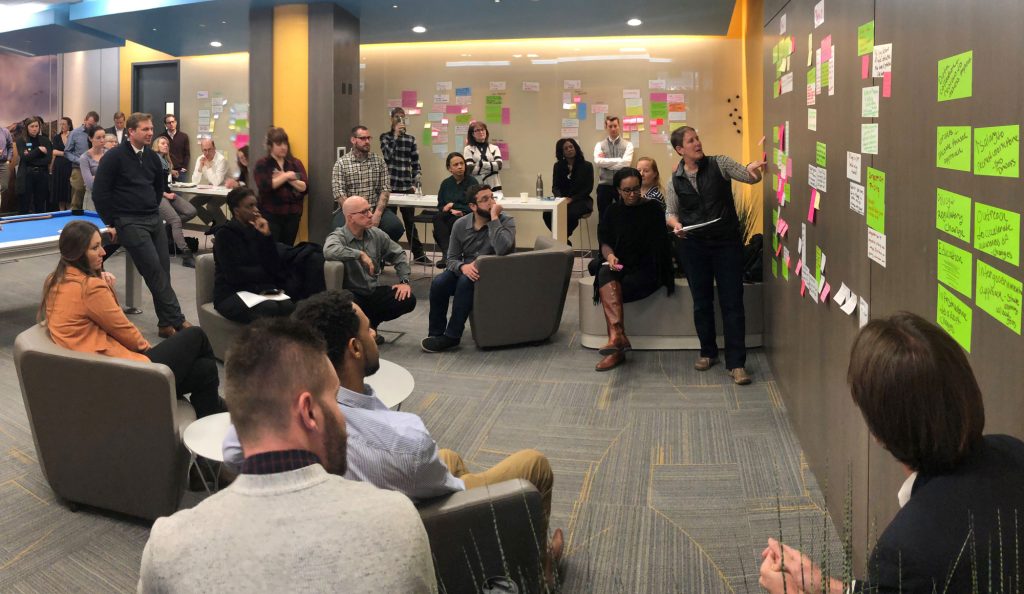
Centering Equity and Shared Learning
A core goal of the project was to develop strategies that both address people’s impact on climate and the impact of climate on local communities, particularly for those disproportionately impacted by pollution, heat, flooding, and lack of access to clean energy solutions. Early in the process, CCC facilitated an equity training for the Task Force and introduced an equity rubric to evaluate potential strategies.
Because participants brought expertise in different topic areas, transportation, energy, waste, buildings, adaptation, etc., CCC created an interactive learning session that combined factsheets, topic stations, and hands-on exploration. This leveled the playing field and ensured informed participation across the board. Subgroups were then formed to develop targeted recommendations, which proved a powerful structure for meaningful collaboration.
Bridging Divides to Fund Climate Solutions
One of the most sensitive and complex challenges of the process was determining how to fund Denver’s climate goals. CCC facilitated weeks of in-depth, often difficult conversations, balancing ambition, equity, and political reality. As COVID-19 forced meetings online, CCC maintained momentum and trust, guiding the Task Force through an exploration of dozens of funding options. Ultimately, the group reached consensus on a progressive property tax increase that would equitably return more benefits to low-income households. This hard-earned agreement paved the way for City Council action and strong public support, leading to the measure’s passage by voters and the creation of Denver’s Office of Climate Action, Sustainability, and Resilience.
Equitable Public Engagement at Scale
CCC led a parallel public engagement effort that reached over 4,000 Denverites, even amidst a pandemic. The approach combined in-person “Meetings in a Box,” stakeholder affinity groups, and an online forum hosted on Consider.it. Five affinity-based Stakeholder Advisory Groups ensured that youth, low-income households, communities of color, outdoor workers, and older adults had safe, accessible spaces to contribute ideas and concerns. To meet these diverse needs, the CCC had community liaisons engage communities of color, Spanish speakers, and immigrants.
Meeting in a Box sessions, facilitated by community members and partners, brought the conversation into neighborhoods and living rooms. Round 1 included 28 in-person meetings with 247 participants; Round 2 shifted online with over 100 virtual attendees. Meanwhile, the Consider.it platform allowed nearly 3,700 unique visitors to weigh in on proposals, generating thousands of comments, ratings, and ideas over just two weeks.

From Plan to Policy to Implementation
When the Task Force presented its final report, the Denver City Council voted to refer the funding mechanism to voters. CCC’s transparent, inclusive process was credited with building the momentum needed for widespread support. In November 2020, Denver voters approved the ballot measure, leading to the creation of the Office of Climate Action, Sustainability, and Resilience, and raising $40M annually to mitigate climate change.
A Model for Inclusive Climate Planning
This project demonstrates what’s possible when inclusive design, strong facilitation, and deep public engagement come together. CCC’s approach has been recognized as a national model for participatory climate planning grounded in equity. The full recommendations report can be found here.